
VitaScreen — CMA Screening What you don't measure, you can't optimize.

Mitochondrial & Longevity Diagnostics in 5 Minutes.

Right in your practice. At the Point‑of‑Care.

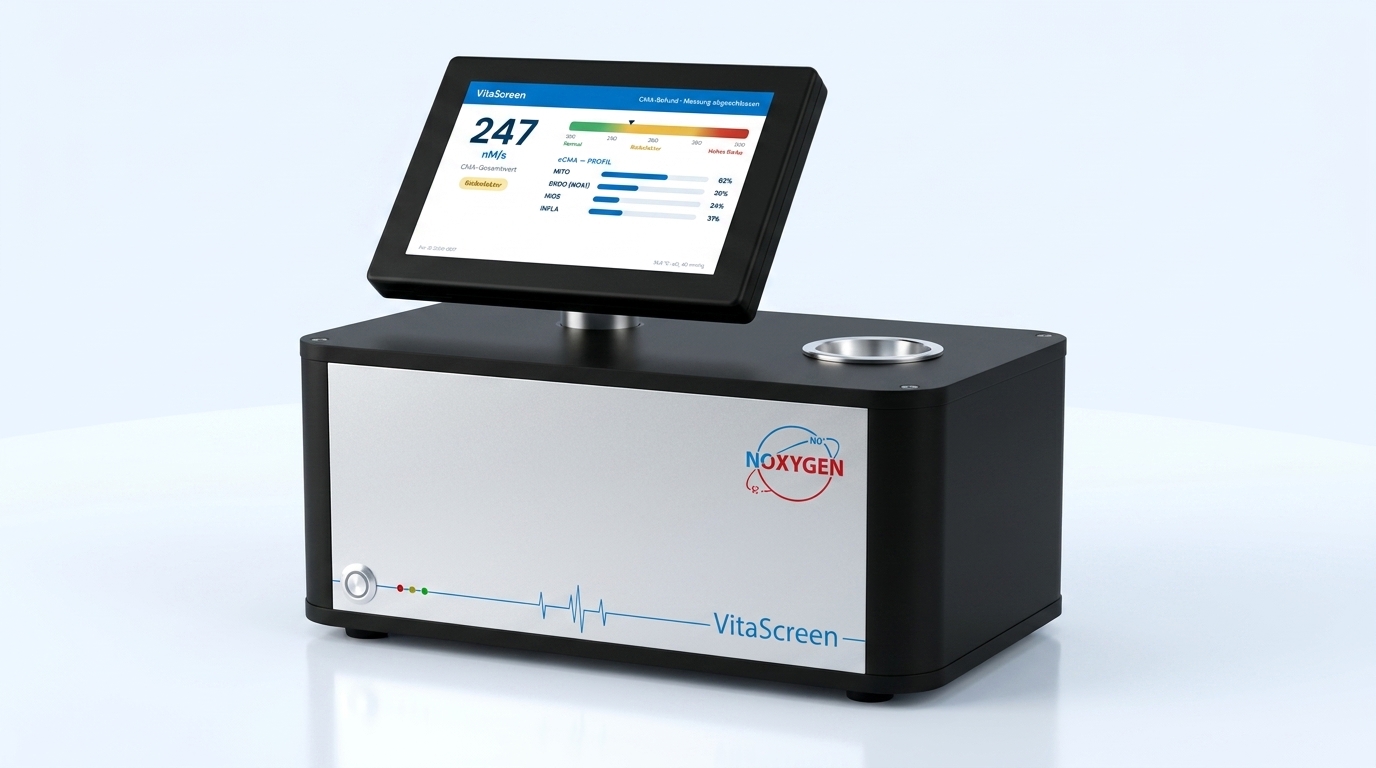
VitaScreen objectively measures cellular oxidative stress — from a single drop of blood, in 5 minutes. One number that shows you whether your therapy is working: before treatment, after, and over time.

Sample
1 drop of blood
Time to result
5 minutes
Method
CMA · EPR‑based
The problem

Until now, oxidative stress could only be estimated — not steered.

Conventional markers like MDA, 8‑OHdG or TAS measure the end products of radical reactions — hours to days after the reaction has taken place. What's happening in the cell right now stays invisible.

  • External lab, days of wait time. Therapy adjustment only happens at the next appointment.
  • Indirect markers. Estimation instead of quantification of actual ROS activity.
  • Before/after impossible. Treatment outcome stays subjective — recommendation instead of evidence.
  • No practice ROI. Hard to position as a private/IGeL service without a visible result.
The consequence

Therapies that get recommended without objective proof of effect.

Patients feel an effect — or they don't. Practices can't show that an intervention is working, and can't steer when to adjust it.

~7 days
Typical turnaround MDA / 8‑OHdG
5 min
VitaScreen at the Point‑of‑Care
VitaScreen vs. conventional diagnostics

Measure directly — don't calculate around it.

VitaScreen quantifies ROS directly via the patented CMA method (Cellular Metabolic Activity, EPR/ESR‑based) — at the patient's side, with no lab shipment.

Criterion
MDA / 8‑OHdG
TAS / TBARS
VitaScreen · CMA
Measuring principle
End product, indirect
Global status
Direct: ROS activity
Time to result
3–7 days
2–5 days
< 5 minutes
Sample
Venous blood draw
Venous blood draw
1 capillary drop
Before/after
Weeks delayed
Limited
In the same session
Place of measurement
External lab
External lab
Practice · Point‑of‑Care
Therapy steering
Retrospective
Retrospective
Iterative, evidence-based

← scroll table sideways →

Methodological foundation: EPR spectroscopy (electron paramagnetic resonance) — the recognised gold standard for direct radical detection.1

How it works

Four steps — from drop to therapy decision.

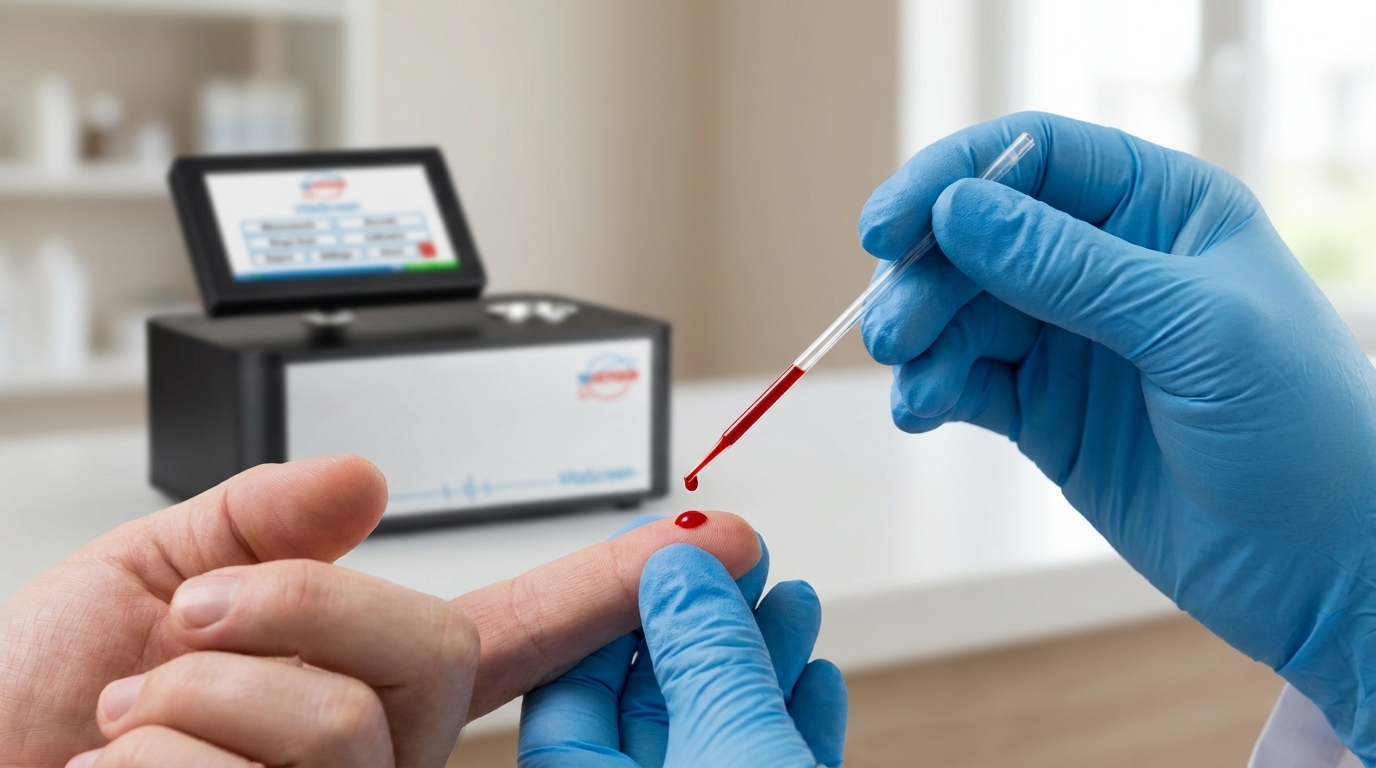
Capillary sample — drop of blood from the fingertip
01 · Sample One capillary drop from the fingertip. Venous draw also possible.
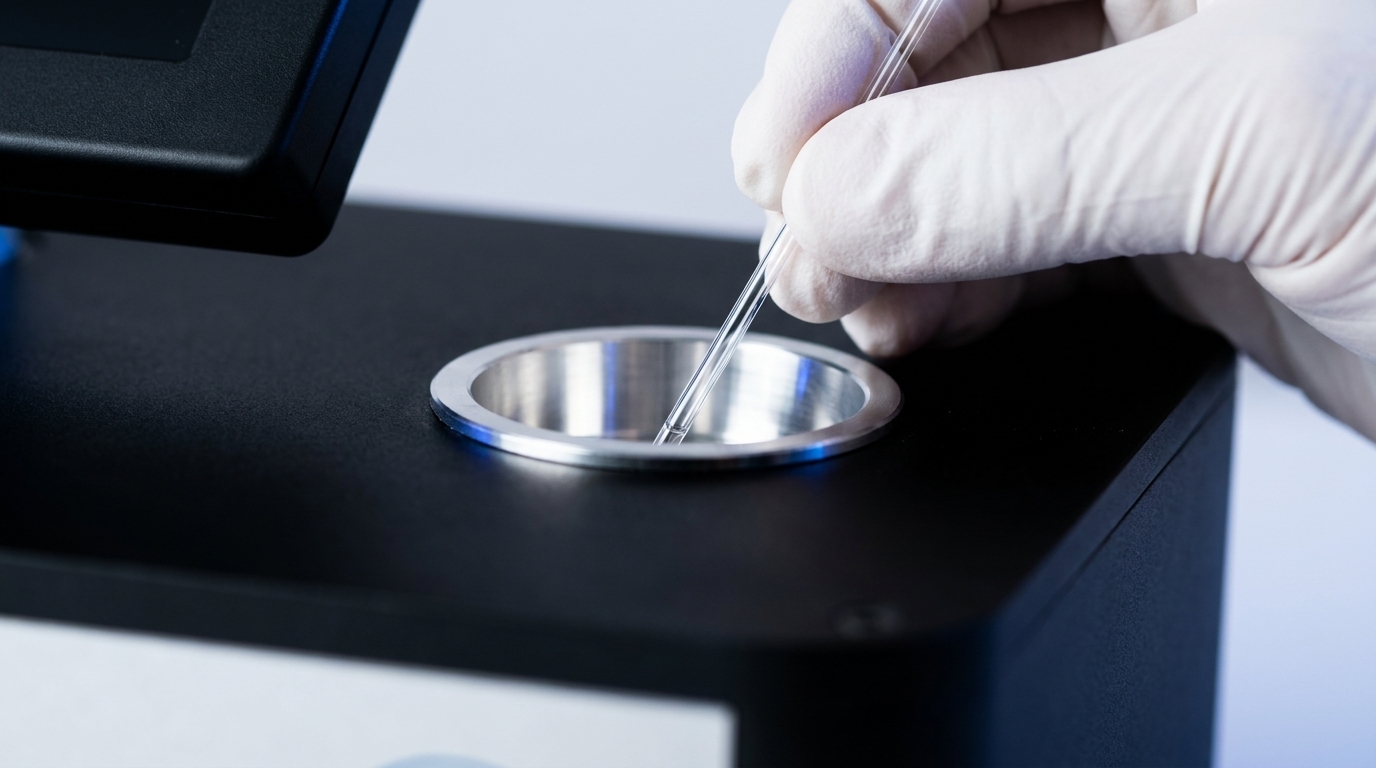
Capillary being inserted into the VitaScreen sample chamber
02 · Measurement Measurement on-site after sample preparation. No lab shipment.
01

Take the drop

A capillary sample from the fingertip — like a blood-glucose test. Venous draw also possible.

~ 30 sec.
02

CMA measurement

The device quantifies cellular ROS activity in real time — directly, not via end products.

~ 5 min.
03

Interpret values

Marker profile with reference range and comparison to baseline. Clearly readable for clinician and patient.

Immediate
04

Steer the therapy

Adjust the intervention, re-measure after weeks — document the outcome objectively.

Repeatable
CMA247 nM/s eCMA MITO eCMA iNOS Sample marker profile · values are fictional
Method & evidence

EPR precision. On the practice desk.

The patented CMA method (Cellular Metabolic Activity) is a cellular test based on EPR spectroscopy, run on the miniaturised EPR spectrometer VitaScreen. It measures ROS formation in blood cells under physiological conditions (T = 36.6 °C, pO₂ 40 mmHg) — as simple as a blood-glucose test, no cryogenics, no specialist lab.

1 drop
Capillary blood from the fingertip
36.6 °C
Physiological measurement (pO₂ 40 mmHg)
> 25
Correlated lab & functional parameters2
IVDR‑IVD
Status labelled per application

R&D applications (longevity markers) are clearly flagged in the marker profile.

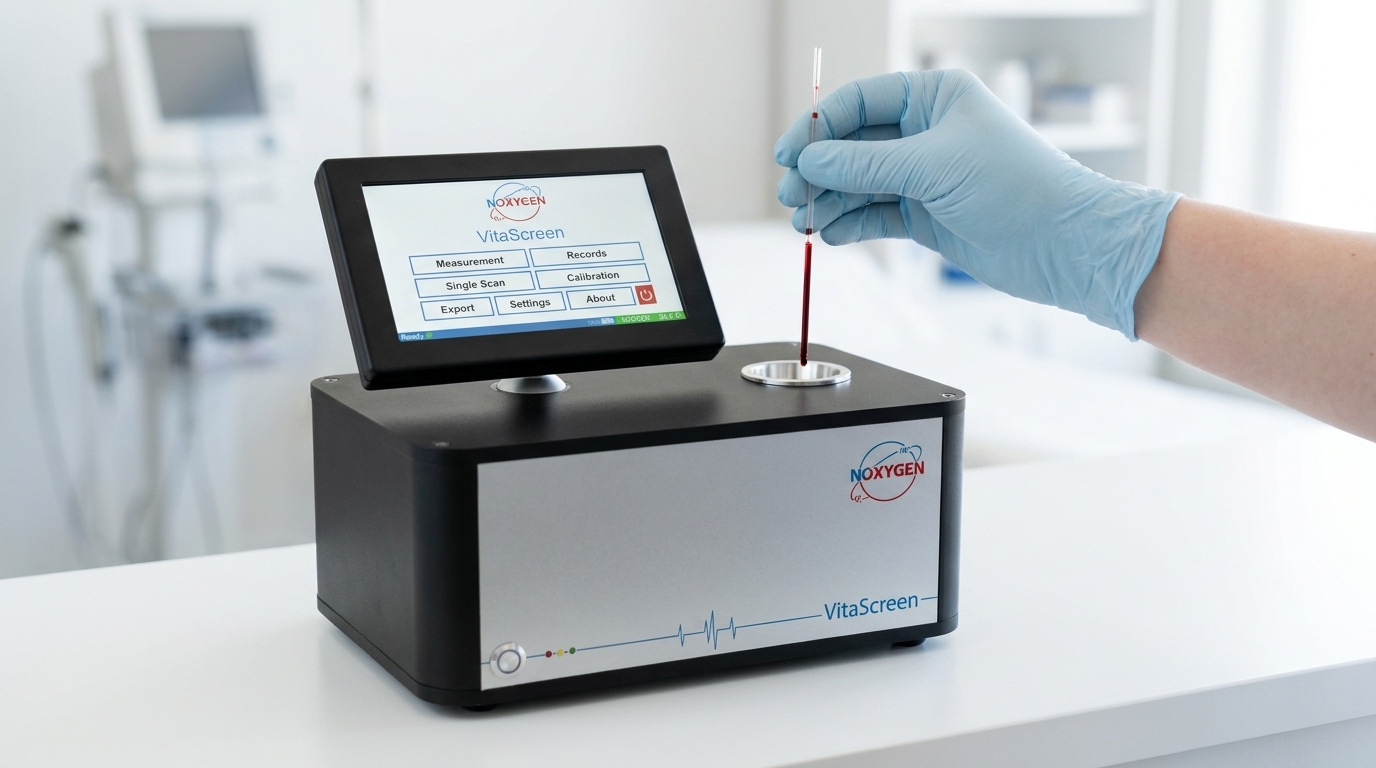
VitaScreen in a clinical setting — capillary sample
EPR · ROS spectrum Sample
ROS formation in nM/s Values are fictional
Reference values

How to read the CMA value

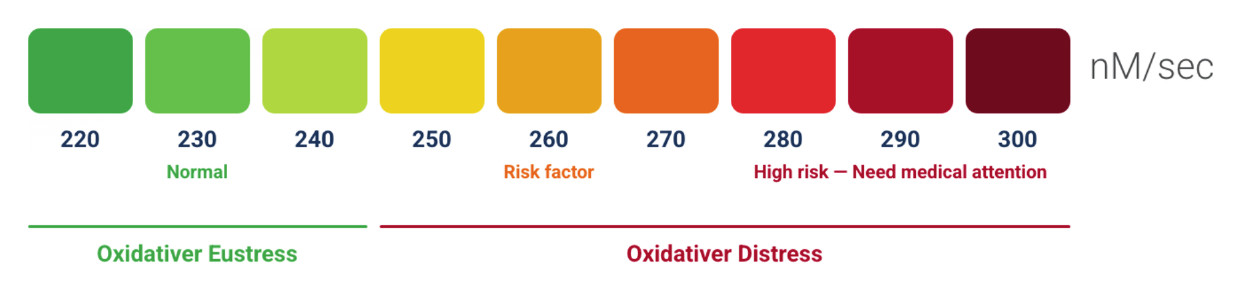
CMA reference scale from 220 to 300 nM/s: 220–240 oxidative eustress (normal, green), 250–270 risk (yellow-orange), 280–300 high risk (red).
220–240 nM/s marks oxidative eustress — the healthy corridor. From 250 nM/s oxidative distress begins; above 280 the high-risk range.2 Orientation values from normalised control cohorts across several publications — they don't replace a medical diagnosis.
eCMA differentiation

One value — broken down by metabolic pathway

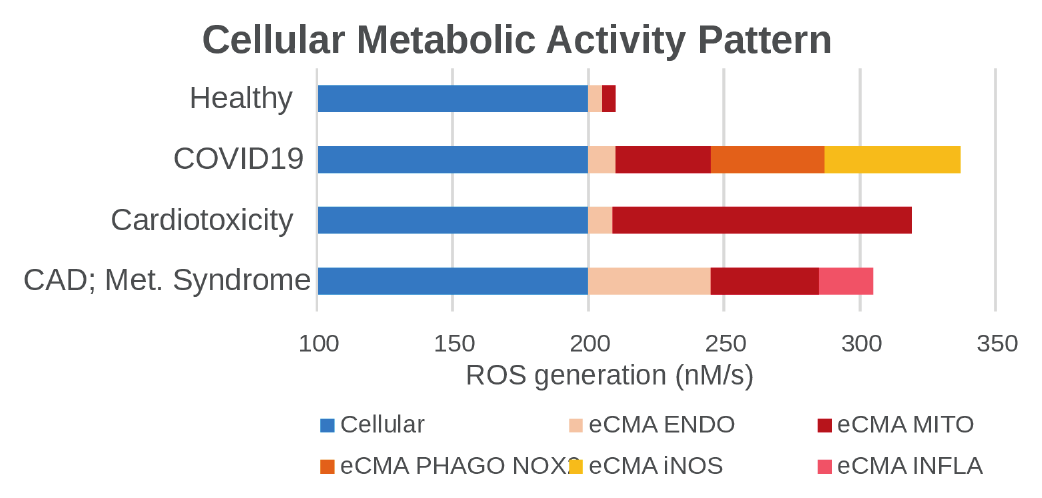
Cellular Metabolic Activity Pattern — bar chart of ROS formation in nM/s for Healthy, COVID19, Cardiotoxicity and CAD/Met. Syndrome, broken down by eCMA markers.
VitaScreen first delivers a total value — and on demand the underlying profile: MITO, ENDO, iNOS, PHAGO NOX and INFLA. This makes different pathophysiological patterns visible.3
The evidence

When the CMA value drops, the whole system improves.

A favourable reduction in the CMA value correlates with measurable improvements across more than 25 laboratory, metabolic, inflammatory and functional cardiac parameters.2

Excerpt from the "Human Oxidative Stress & Performance Evaluation" study (HOPE)
CMA 19.7 %
NO• 190 %
Systolic blood pressure
7.1 %
HDL cholesterol
10.9 %
hsCRP
25.1 %
Heart rate (100 W)
10.6 %
LDL cholesterol
7.6 %
TNF‑α resistance
53.8 %

Shown are representative changes in cardiac function, lipid metabolism and inflammatory markers in relation to CMA and endothelial function (NO levels), after 3 months on a multifunctional supplement containing 22 essential trace minerals, oligo-vitamins, omega-3 fatty acids EPA and DHA, grape seed and grape skin extracts, extracts of devil's claw, turmeric and ginger, plus probiotic bacteria.7

Use cases

Therapy steering for practices that demand evidence of effect.

For doctors, therapists and practitioners who want to document treatment outcomes objectively — and show their patients measurable progress over time.

IHHT & altitude training

Steer hypoxia sessions adaptively: measure baseline, dose the training stimulus, document recovery. Stress load as an objective control variable instead of SpO₂ guesswork.

CMAeCMA MITOBefore/after
R&D4

Longevity & prevention

Marker profile for patients with a longevity focus — as part of a structured programme. Repeated measurements over months.

SIRT1AMPKIGF1mTOR

Generalised endotheliitis

eCMA iNOS for objective follow-up in patients with Long-COVID / ME-CFS symptoms.

eCMA iNOSFollow-up monitoring
The origin story

From the research lab to the practice — the journey behind VitaScreen.

Together with Noxygen, Dr. med. Bruno Fink spent years researching the direct measurement of oxidative species — what used to require a specialist lab and cryogenics is now delivered on the practice desk as the patented CMA method.

01 The spark

What are you actually measuring?

The fundamental research question: what are you measuring when you measure oxidative stress — and why do end-product markers only show what happened days later? EPR/ESR detects reactive species directly — but until now only in specialist labs.

Research question
02 The breakthrough

EPR straight from the drop.

Out of the ESR methodology of basic research grew the patented CMA — a compacted variant that quantifies paramagnetic species from cellular metabolism without cryogenics. Hours turn into minutes.

Method transfer
03 The handback

Practice-ready. For every desk.

What used to need specialist know-how in the lab now runs at the Point‑of‑Care: 1 capillary drop, a marker profile in under 5 minutes, with clearly readable reference ranges. Therapy becomes steerable.

Point‑of‑Care
Dr. med. Bruno Fink, Founder & CEO Noxygen
In post-COVID we see a clear pattern at the cellular level: four enzymes are overexpressed — inducible NO synthase, NOX1, the mitochondria and the phagocytic NADPH oxidase. The strongest contribution comes from iNOS. Exactly this pattern becomes visible — where the standard lab stays silent.

Dr. med. Bruno Fink · Founder & CEO Noxygen · developer of the CMA method
Voices from practice

What practices change with VitaScreen.

The developers and experts behind VitaScreen — plus a documented case from a NOXYGEN study. Individual cases; no generalised or guaranteed outcome.

5 min
Result in the same appointment
1 drop
Capillary blood from the fingertip
> 25
Correlated parameters2
Private
Billable as a private service5

"I always thought I was healthy …"
Mark, 47, a passionate athlete — and yet exhausted every day. His CMA value revealed a cardiovascular risk that nothing on the surface suggested. After an adjusted training programme, his values were back in the healthy range a year later.

Individual results vary. Case description from a NOXYGEN study; no curative or outcome promise.6
Steer therapy, don't guess at it.

Book your VitaScreen consultation.

In a 30-minute call we walk you through the method, the workflow, and how VitaScreen fits into your practice — including the private-billing logic.